Most Etsy sellers do not need a warehouse full of branded packaging. They need something that arrives cleanly, protects the product, and makes a buyer feel that a real person cared enough to get the details right.
That is a different problem from the one a large retail brand solves. A small seller may change colours after a season, add a new product next month, or discover that the original shipping box costs more than the item inside it. Low-MOQ packaging is useful because it leaves room for that kind of learning.
1. Decide what the package needs to do first
Before choosing a material or a print style, write down the job. Is the package mainly protecting a fragile candle? Keeping a snack fresh? Making a handmade jewellery order feel like a gift? The answer changes the best format.
A package can be lovely and still be the wrong package. A soft paper bag may be perfect for an in-person market but hopeless for a product that will cross the country in a mailer. Start with the journey, then add the brand details.
2. Start with a stock size when the product is still moving
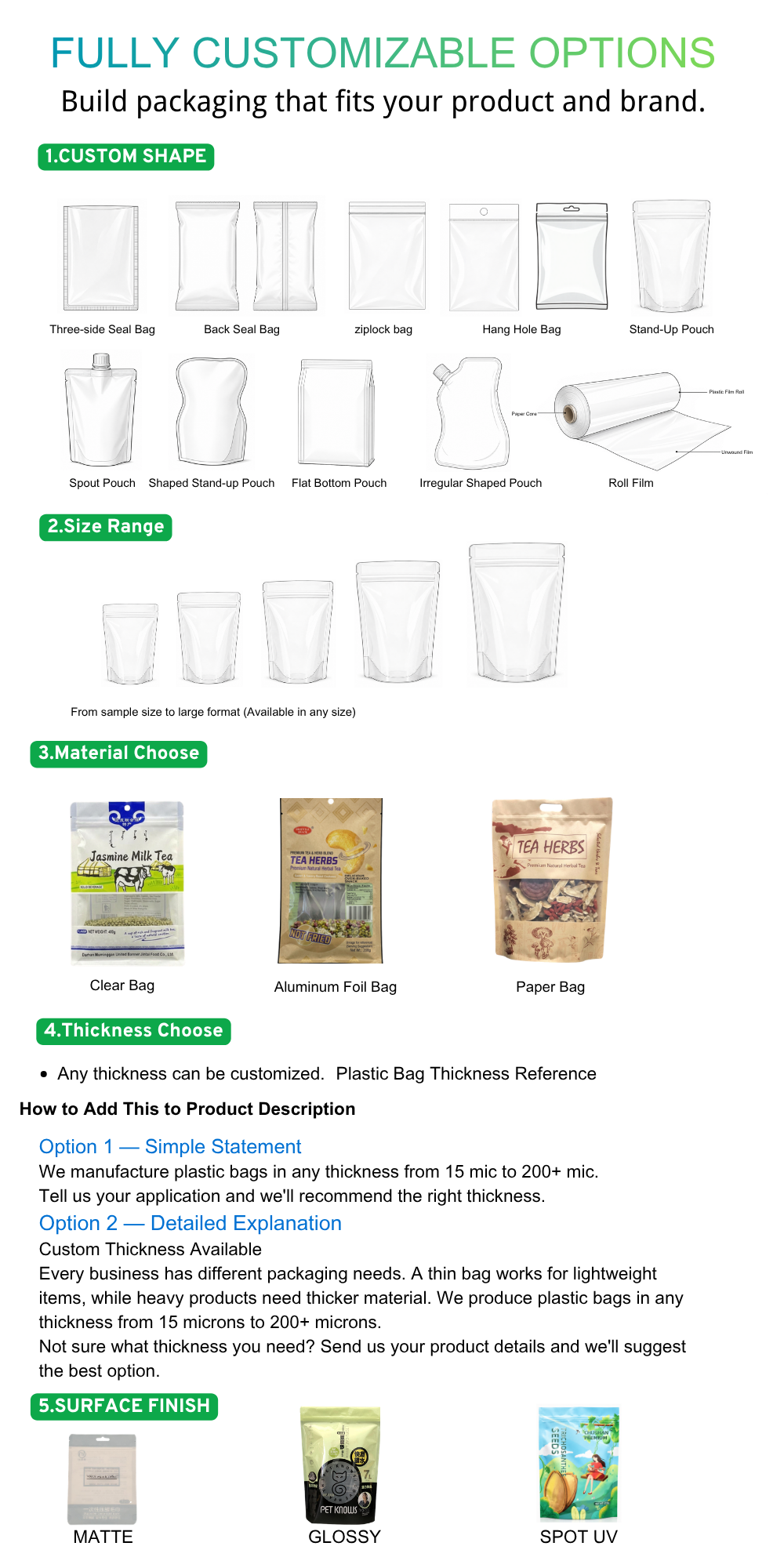
For many new shops, a stock pouch, mailer, or paper bag plus a well-made label is the most sensible opening move. It looks considered, it is easy to reorder, and you can change the label without being left with a stack of old packaging.
That is not a compromise in disguise. A good label, a clear product name, and a package that fits properly can look more confident than a full-print bag trying to say too much. Browse our custom packaging bag options if you are comparing common formats.
3. Make one detail recognisable
Small brands do not need ten visual ideas. Pick one that buyers will recognise: a colour, a simple logo mark, a handwritten-style product card, or a repeating pattern. Carry it from the shop banner to the label and the thank-you note.
Consistency is what makes a package feel like part of a brand. It also makes future changes easier because you know what has to stay familiar.
4. Keep important text away from folds and seals
This sounds boring until a beautifully printed ingredient list folds around the side of a pouch. Leave breathing room around zips, gussets, and heat seals. If you use batch labels, barcodes, or safety information, reserve that space in the artwork before anyone approves production.
Always look at a proof as if you have never seen the product before. Can you read the name quickly? Does the label still look balanced when the package is full? Are the necessary details easy to find? A quiet ten-minute check can save a surprisingly annoying reorder.
5. Buy a sample before you buy confidence
Photos are useful, but they cannot tell you how a zipper feels or whether the bag holds its shape. Order samples when possible. Put your own product inside. Pack it as you would for a customer. Leave it on a shelf for a week. These are the small tests that make a first packaging decision feel much less like a guess.
6. Price the whole order, not only the bag
A low unit cost can hide expensive freight, extra labels, slow packing, or a size that wastes space in every shipping carton. Include all of it. The best packaging choice is the one that supports your margin and your daily routine.
7. Treat the first run as information
Your first run tells you what buyers reorder, which colours photograph well, and whether the package is helping or slowing you down. That information is worth more than a big first discount. Reorder larger once the product and the process have earned it.
When you are ready to compare a small run, send your product type, size, quantity, and shipping needs through our contact page. For more useful packaging decisions without the jargon, visit our blog or see why brands choose us for custom projects.